
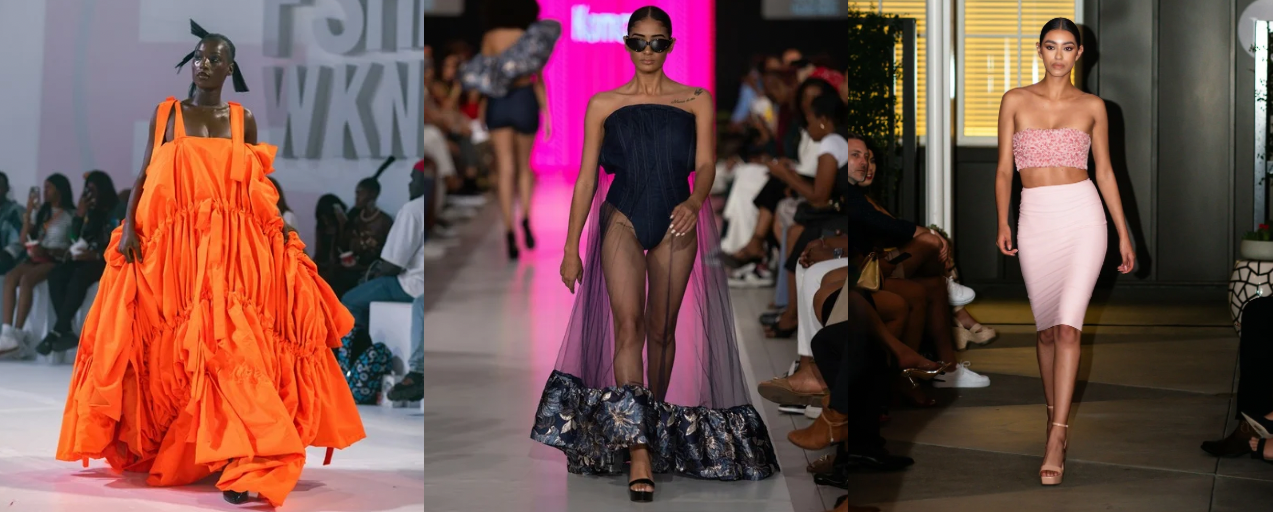
During the Fall/Winter 2025 Fashion Weeks, the representation of mid-size and plus-size models saw a notable decline.
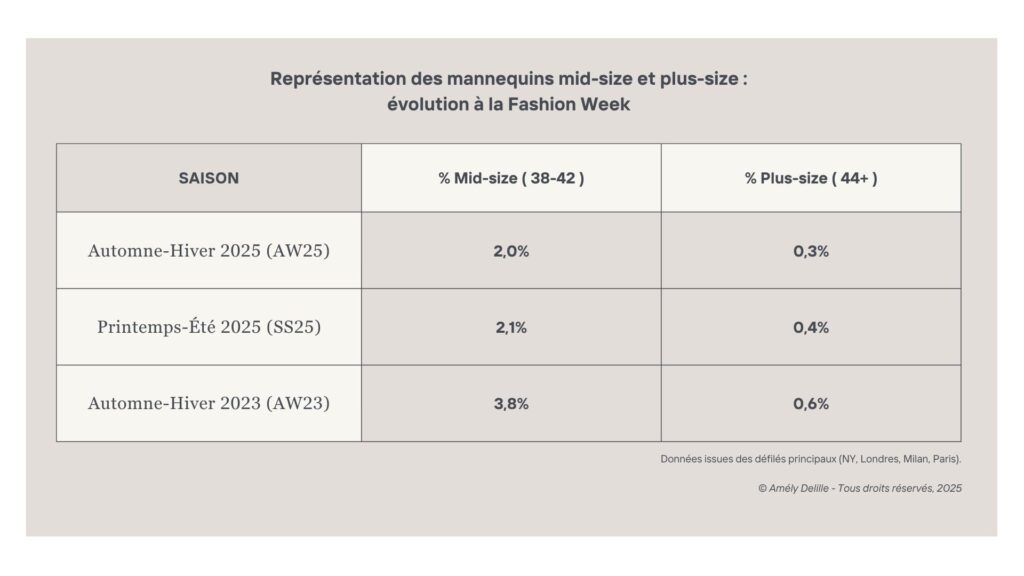
According to Vogue Business: “Of the 8,703 looks presented in New York, London, Milan and Paris, only 2 % were worn by average-size models (US 6-12), and only 0.3 % by plus-size models (US14+), a decrease from previous seasons.”
A clear step backwards from previous seasons, even though marketing rhetoric around diversity has never been so omnipresent.
Faced with this blatant contradiction between the projected image and the observed reality, a question arises: has inclusivity in fashion become a marketing mirage?
According to Vogue Business reports, the representation of average (US 6-12) and plus-size (US14+) models has decreased significantly:
“The Spring-Summer 2025 (SS25) season also saw no turning point, with stagnant figures: 2.1 % mid-size looks and 0.4 % plus-size looks.” According to Vogue Business.
This decline is all the more worrying since it is not accompanied by any change.
According to the latest analysis by Vogue Business, the representation of non-standard bodies is on a downward slope:
While in 2022, the catwalks seemed to be paving the way for greater inclusivity, this trend has abruptly reversed. And yet, brands continue to communicate their supposed openness to all body types.

Sometimes, all it takes is one plus-size look to create the illusion of progress throughout an entire runway show and create a buzz. Brands know how to capitalize on the image of a more "out of the ordinary" model to ensure press coverage, without fundamentally changing the way they design or cast.
-> This is what we call the tokenism : Using an individual from a minority group to symbolize a diversity that does not really exist.
Except inclusivity can't be a slogan without action. And body diversity shouldn't be a "fad," it should be the norm.
Some fashion houses continue to capitalize on the image of fashion "for all" without ever truly embodying it. But fortunately, according to several analyses of Vogue Business relating to SS24 Fashion Weeks, some houses are exceptions, like the French brand Balenciaga in Paris with about 6.9 % mid-size looks and 1.1 % plus-size, and also Moschino in Milan which displayed nearly 9,1 % of looks worn by mid-size and plus-size models combined. While this isn't the majority of brands, we applaud them and encourage major fashion houses to do the same.
And you, do you want real change, or just the illusion of progress?
SOURCES:
Vogue Business – Size Inclusivity Report AW25
A Sustainable Closet – Plus-size is not a trend
Fashion Dive-2025 Runway Representation Data